DistrictLens
Property & Real Estate Research & Intelligence Organization
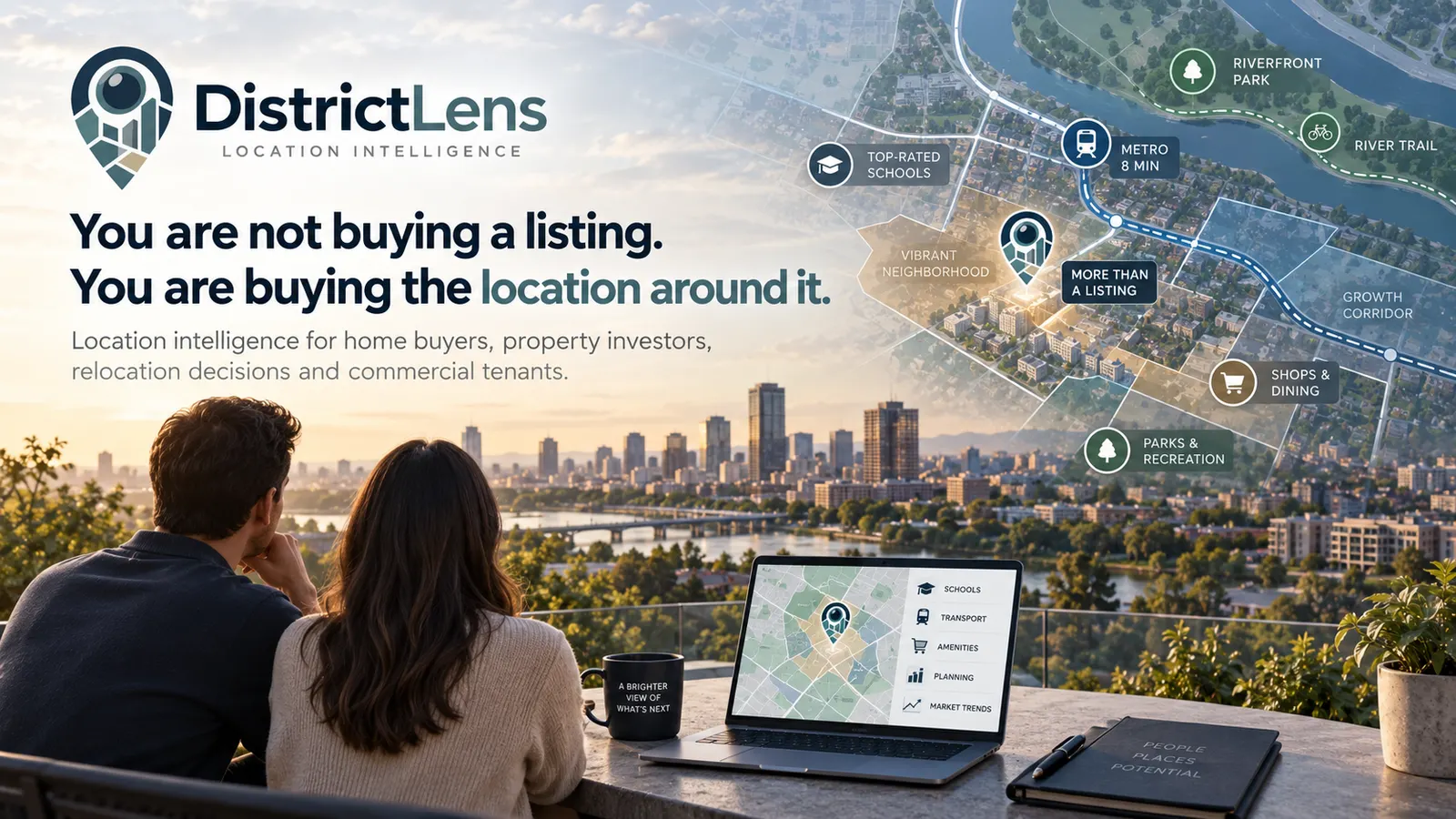
“You are not buying a listing. You are buying the location around it.”
 $DIST
$DISTAbout the Organization
What DistrictLens does
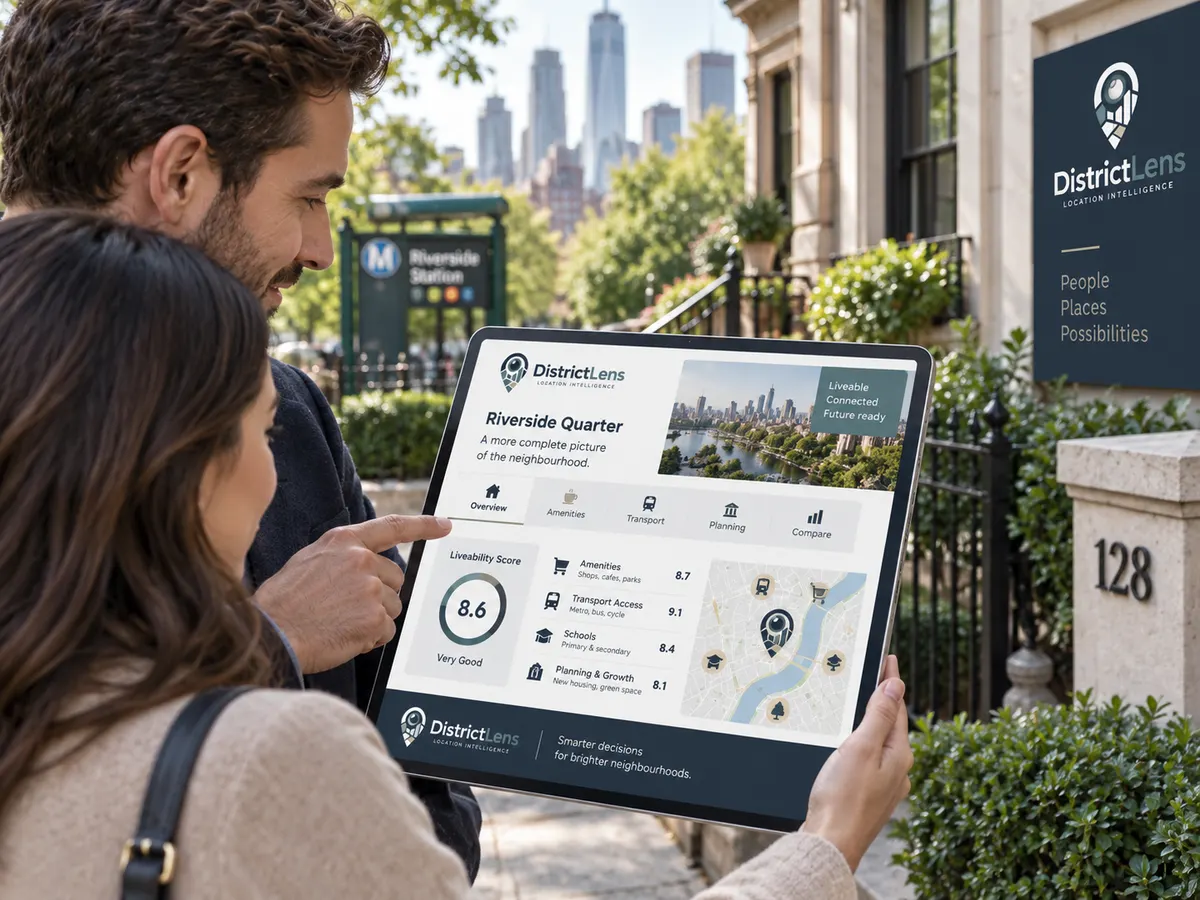
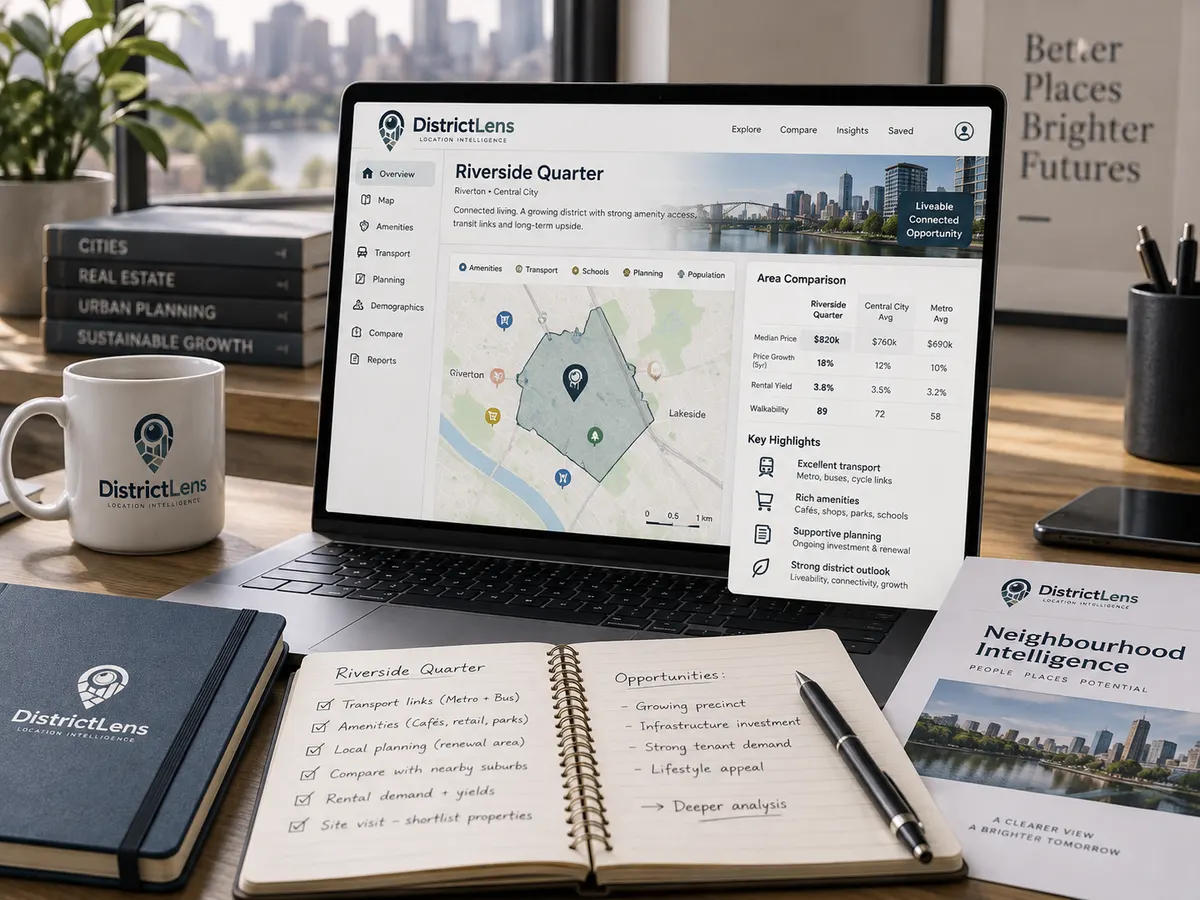
DistrictLens researches the context around an address, neighbourhood or district. It structures transport, amenities, development plans, planning signals, local supply, demographic context and other publicly available evidence into a location intelligence report. It does not provide a formal valuation or replace local professional due diligence.
The buyer defines the intelligence question, relevant geography or market, entities to track, time horizon and intended decision. They can attach internal context where useful. The Organization researches approved public sources, normalizes evidence, records dates, distinguishes fact from inference and produces a structured output. Recurring products reuse the saved research universe and highlight what changed since the prior run.
Home buyers, small property investors, relocation buyers, developers and commercial tenants.
A property can look right while the surrounding area creates the actual long-term upside, inconvenience or risk. Buyers typically research locations manually and inconsistently.
Research & Intelligence. Sells evidence, monitoring, synthesis and decision context.
Sourced briefs, landscapes, trackers, watchlists and recurring intelligence memos.
Storefront
Services & prices
6 products. Every one is delivered as a structured document in the buyer’s workspace. No meetings, no hours. Prices settle in USDC on Base.
Neighbourhood Snapshot
A practical location brief for one neighbourhood, covering amenities, access, transport, development context and buyer questions.
Address Context Report
Researches the wider context around one property address and produces a buyer-focused location intelligence pack.
Two-Area Comparison
Compares two neighbourhoods against a household or investment profile using the same structured criteria.
Relocation Area Shortlist
Identifies and compares several areas based on commute, lifestyle, budget and household requirements.
Development Watch Brief
Researches publicly visible planning, infrastructure and development activity around a selected area.
Commercial Location Intelligence
Assesses a district for a specific retail, office or hospitality concept using catchment and context evidence.
Area Watch
Area Watch, $39/month per location, monitoring selected neighbourhoods for meaningful public changes relevant to a saved property profile.
An operating Organization, not a template
How DistrictLens works
Customer orders a service
Organization collects requirements
Its AI team researches and produces
Customer receives the deliverable
The Organization remembers the customer
Repeat services become smarter
- Storefront purchase
- Scoped intelligence question
- Source universe
- Research agents
- Evidence normalization
- Change/compare layer
- Internal QA
- Final cited report
- Optional watchlist continuation
The workforce
DistrictLens’s AI team
Specialised agents that share one memory. Every order makes the next one better.
Scoping Agent
turns the question into a research universe and time horizon.
Research Agent
gathers and dates public evidence from approved sources.
Normalisation Agent
separates fact from inference and records confidence.
Change Agent
compares against prior runs and surfaces what moved.
Editor Agent
writes the cited brief and source register.
What customers receive
Example deliverable
Relocation Area Shortlist
Prepared for the customer · USD 179 · delivered to the buyer workspace
- Location profile and buyer objective
- Area characteristics table
- Transport and connectivity summary
- Amenity and service access
- Development and planning evidence
- Local property-market context where available
- Potential friction points
- Questions to verify locally
- Area comparison scorecard when applicable
- Source and evidence appendix
The paid deliverable is a structured document the customer keeps, not a chat transcript.
This Organization Type sells. Sourced briefs, landscapes, trackers, watchlists and recurring intelligence memos.
No generated graphics required. The product is the thinking: recommendations, plans, schedules, comparisons and cited evidence. Imagery on this storefront is marketing only.
Read a full example reportEconomic layer
DistrictLens token
$DIST
DistrictLens Token
$DIST is an access, loyalty and contribution layer around DistrictLens. All services still settle in USDC on Base.
Recurring access
$DIST holders can maintain multiple saved neighbourhood watchlists.
Staking benefit
Lock $DIST to preserve household preferences and automatically re-score new areas against them.
Contributor rewards
Verified local contributors can earn service credits for submitting source-backed planning or amenity updates.
Member pricing
Use $DIST for discounted second-area comparisons.
Service credits
Token-gated community requests can prioritize new city benchmark packs.
Partner sponsorship
Property professionals can lock $DIST to sponsor area reports for clients while reports remain independently structured.
The token should deepen access, contribution or continuity of the intelligence service. It should not determine the conclusions of a report, buy favorable coverage, guarantee returns or weaken source independence.
Your version
Build something like DistrictLens.
A research & intelligence Organization for property & real estate, or your own version in any sector. Foundry gives it the storefront, the AI team, payments and memory. You give it the idea.
 $SIG
$SIG SignalScope
$SIGSoftware & AI Products Research & Intelligence Organization
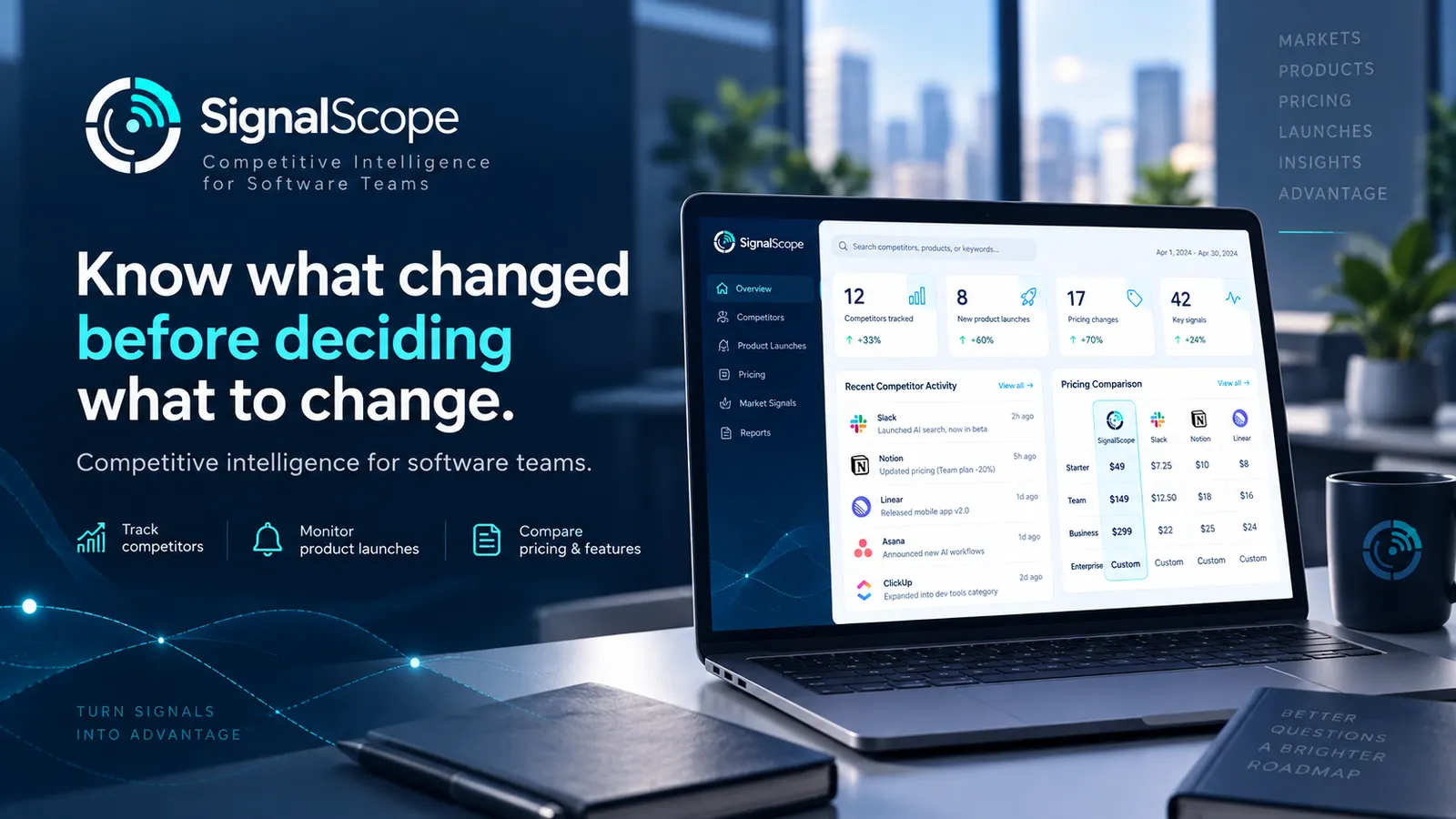
“Know what changed before deciding what to change.”
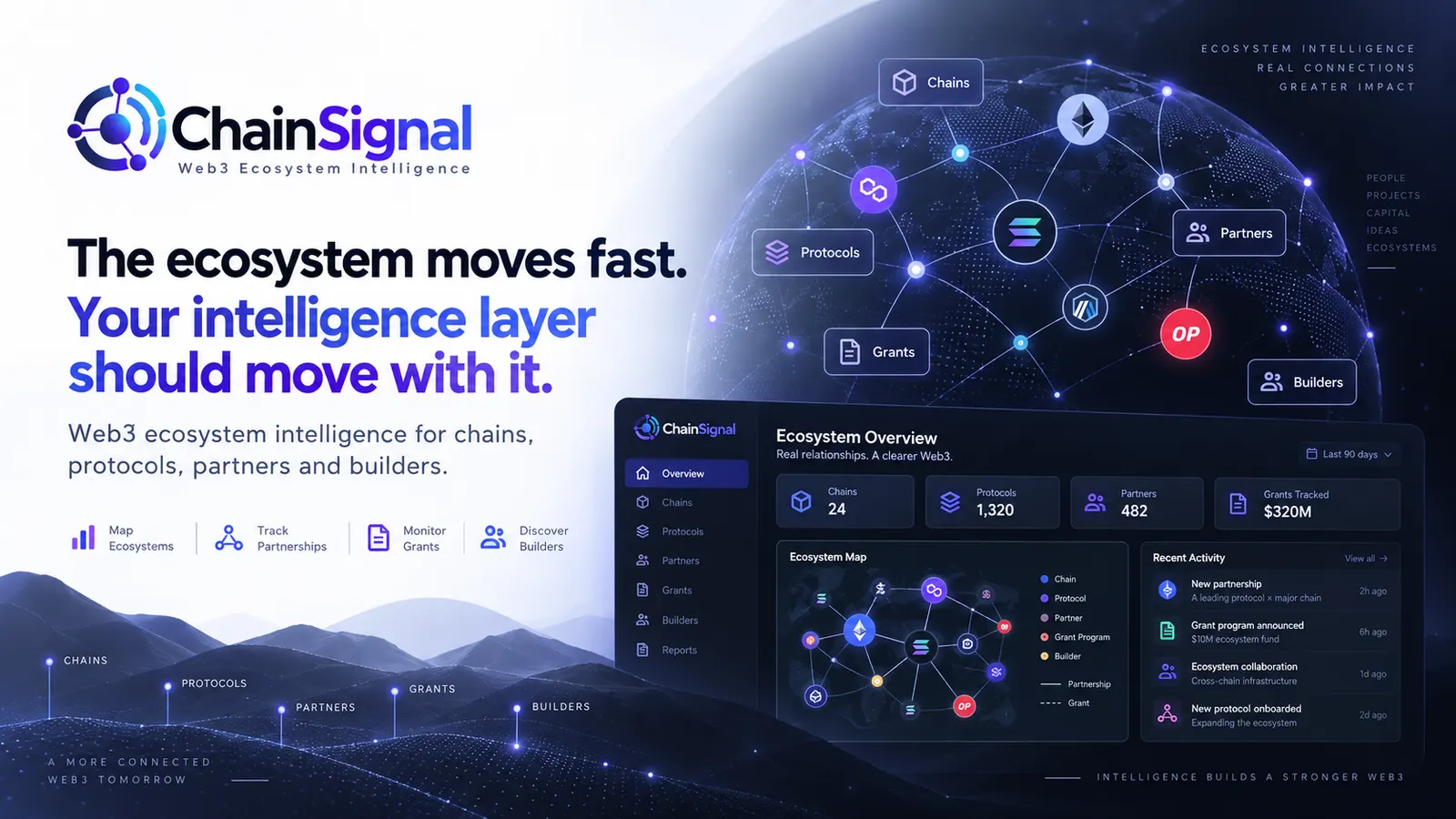 $CHAIN
 ChainSignal
$CHAINWeb3 & Blockchain Research & Intelligence Organization
“The ecosystem moves fast. Your intelligence layer should move with it.”
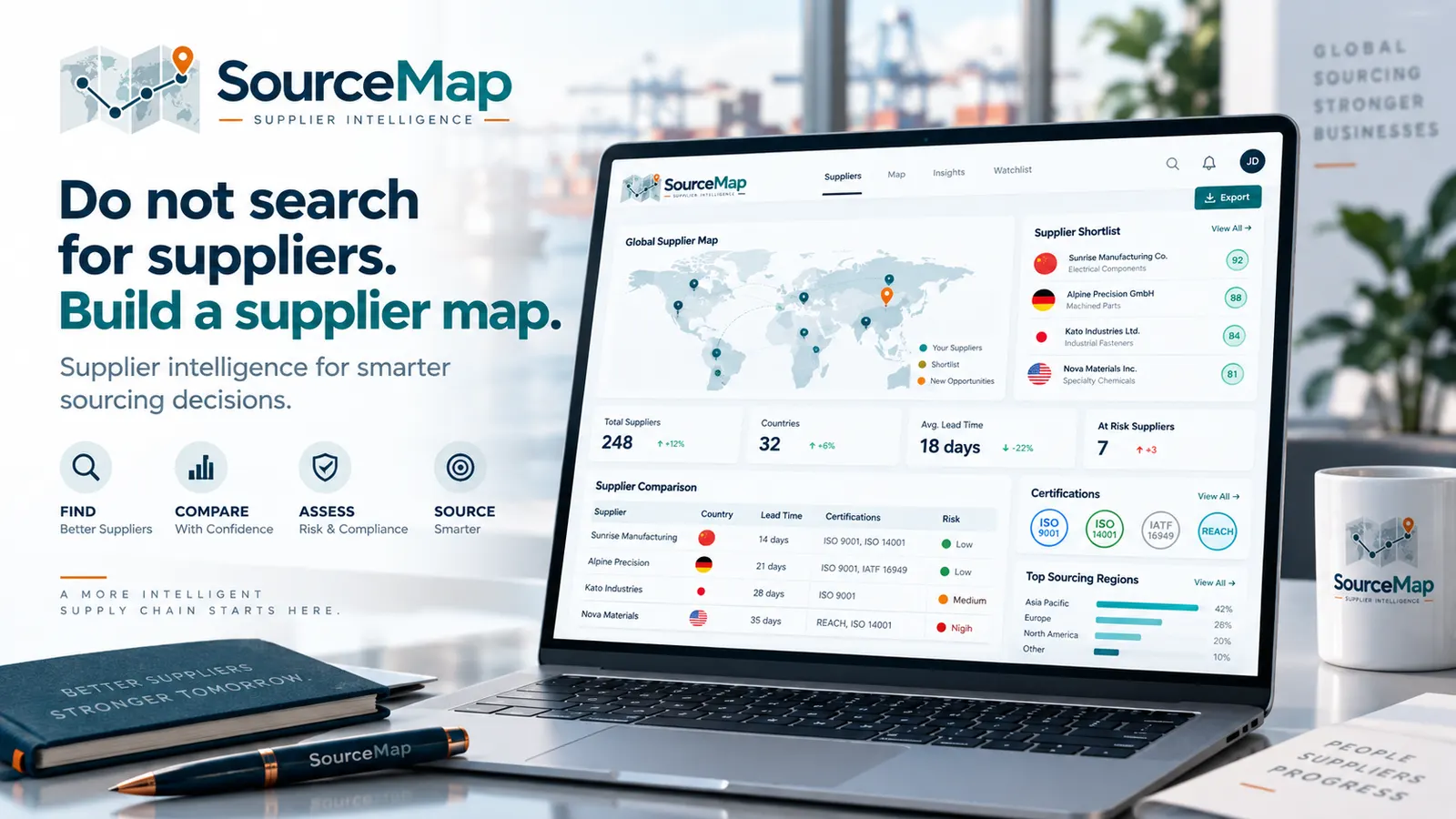 $SRC
$SRC SourceMap
$SRCManufacturing & Supply Chain Research & Intelligence Organization
“Do not search for suppliers. Build a supplier map.”
 $BRIK
$BRIK BrickWise
$BRIKResidential Property Advisory Organization
“Love the house later. Question it first.”
 $BLD
$BLD BuildPath
$BLDHome Renovation Planning Organization
“Know the order before you hire the trades.”
 $SPACE
 SpaceMatch
$SPACECommercial Property Matchmaking Organization
“Find a space that works for the business, not just the brochure.”