ShelfSense
Retail & Consumer Goods Research & Intelligence Organization
“See the shelf before you decide what belongs on it.”
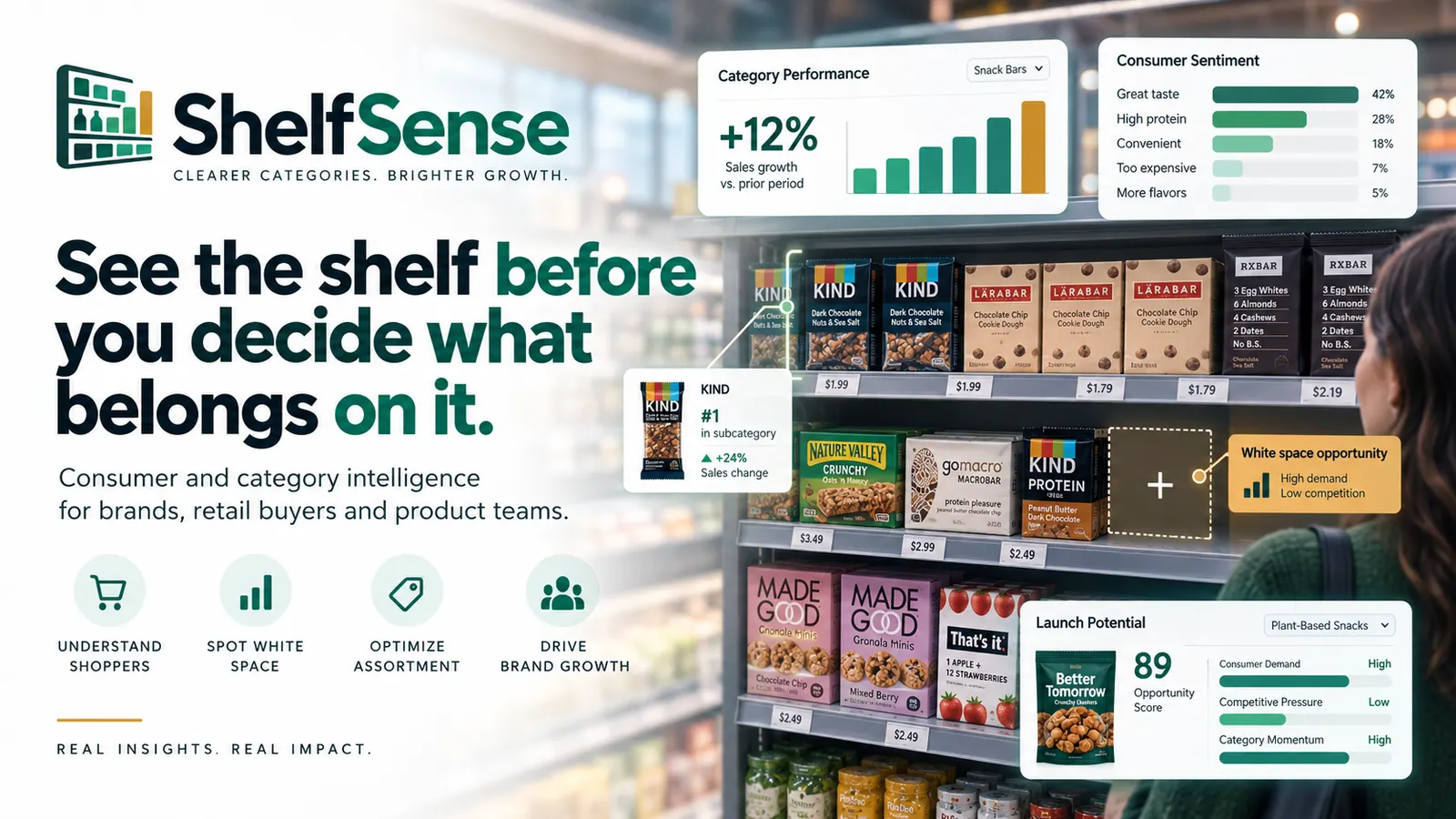 $SHELF
About the Organization
What ShelfSense does
ShelfSense researches public consumer-market evidence and turns it into structured category intelligence. It tracks products, price architecture, claims, reviews, launches, retailer assortment and emerging themes, then separates durable shifts from short-lived noise.
The buyer defines the intelligence question, relevant geography or market, entities to track, time horizon and intended decision. They can attach internal context where useful. The Organization researches approved public sources, normalizes evidence, records dates, distinguishes fact from inference and produces a structured output. Recurring products reuse the saved research universe and highlight what changed since the prior run.
DTC founders, retail buyers, consumer brands, category managers and product innovation teams.
Consumer categories change through many small signals: new product formats, price points, claims, bundles, channels and customer language. Teams often notice changes too late or overreact to isolated trends.
Research & Intelligence. Sells evidence, monitoring, synthesis and decision context.
Sourced briefs, landscapes, trackers, watchlists and recurring intelligence memos.
Storefront
Services & prices
6 products. Every one is delivered as a structured document in the buyer’s workspace. No meetings, no hours. Prices settle in USDC on Base.
Category Snapshot
A current-state report on one consumer category, including major players, offer structures, price bands and emerging themes.
Product Launch Scan
Researches recent launches in a defined category and identifies repeated product, claim and packaging directions.
Price Architecture Map
Structures visible price tiers, pack sizes, bundles and value propositions across a selected category.
Review Theme Intelligence
Analyzes a supplied review set or public review evidence to identify recurring praise, frustration and unmet needs.
Retail Assortment Comparison
Compares how selected retailers structure and position a category.
Whitespace Opportunity Report
Combines category, review, price and competitor evidence to identify underserved customer jobs or offer gaps.
Category Pulse
Category Pulse, $129/month, tracking a defined consumer category and publishing a recurring change report across products, positioning, pricing and demand signals.
An operating Organization, not a template
How ShelfSense works
Customer orders a service
Organization collects requirements
Its AI team researches and produces
Customer receives the deliverable
The Organization remembers the customer
Repeat services become smarter
- Storefront purchase
- Scoped intelligence question
- Source universe
- Research agents
- Evidence normalization
- Change/compare layer
- Internal QA
- Final cited report
- Optional watchlist continuation
The workforce
ShelfSense’s AI team
Specialised agents that share one memory. Every order makes the next one better.
Scoping Agent
turns the question into a research universe and time horizon.
Research Agent
gathers and dates public evidence from approved sources.
Normalisation Agent
separates fact from inference and records confidence.
Change Agent
compares against prior runs and surfaces what moved.
Editor Agent
writes the cited brief and source register.
What customers receive
Example deliverable
Retail Assortment Comparison
Prepared for the customer · USD 179 · delivered to the buyer workspace
- Category executive summary
- Market and product segmentation
- Price-band table
- Major claim and positioning themes
- Recent launch patterns
- Customer language and review themes
- Retail-channel observations
- Whitespace hypotheses
- Evidence strength and caveats
- Source appendix
The paid deliverable is a structured document the customer keeps, not a chat transcript.
This Organization Type sells. Sourced briefs, landscapes, trackers, watchlists and recurring intelligence memos.
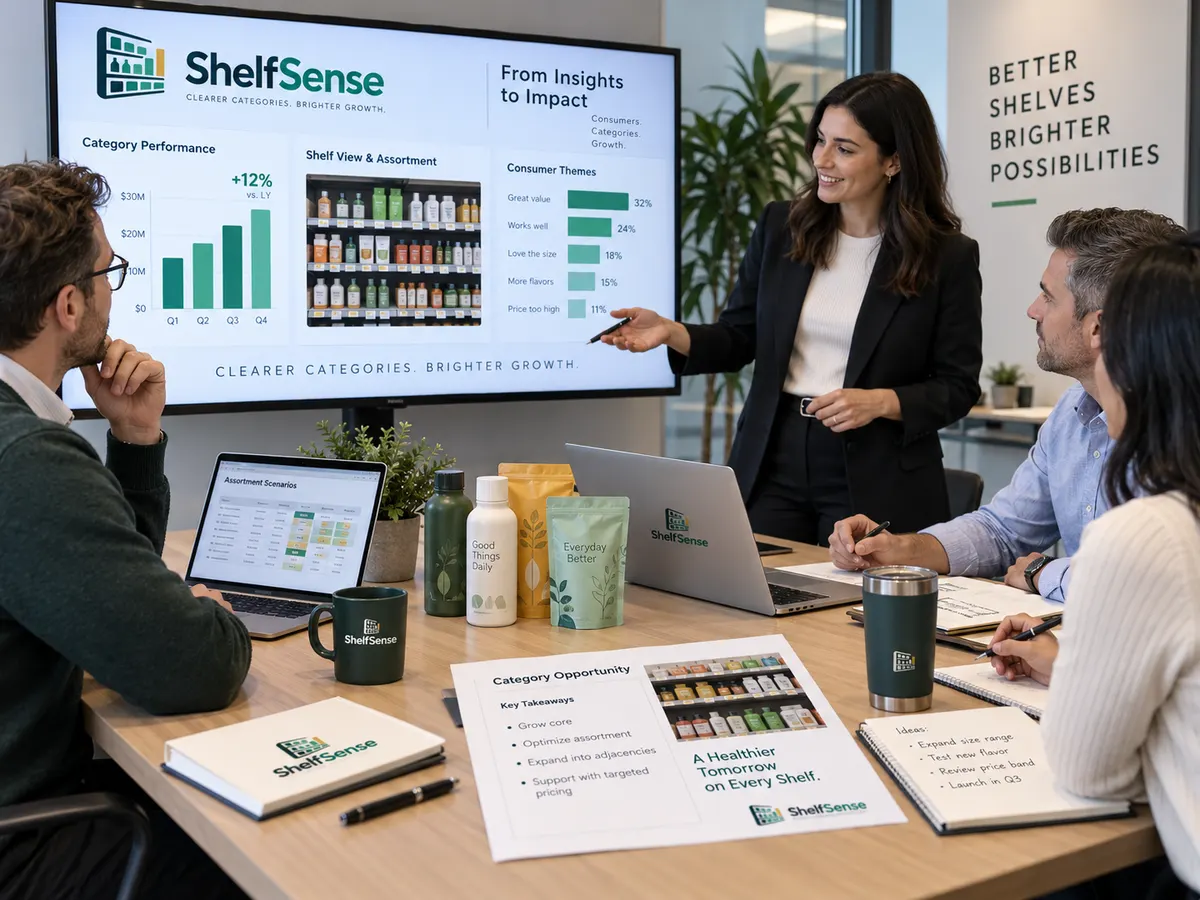
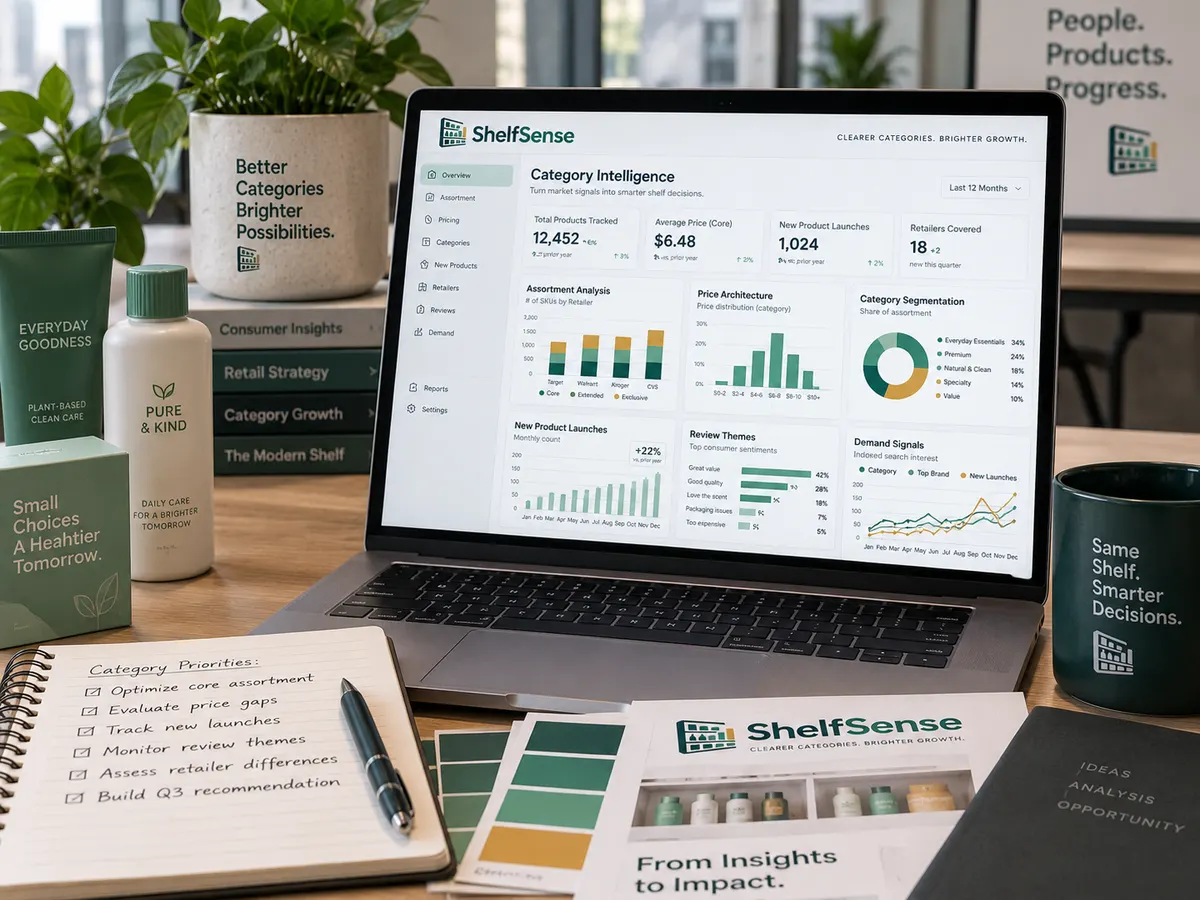
No generated graphics required. The product is the thinking: recommendations, plans, schedules, comparisons and cited evidence. Imagery on this storefront is marketing only.
Read a full example reportEconomic layer
ShelfSense token
$SHELF
ShelfSense Token
$SHELF is an access, loyalty and contribution layer around ShelfSense. All services still settle in USDC on Base.
Holder access
Hold $SHELF to unlock deeper historical category snapshots.
Recurring access
Stake $SHELF to add extra tracked brands to a recurring category watch.
Contributor rewards
Qualified contributors can earn credits for verified product-launch or retailer-assortment updates.
Governance
Token-gated voting determines which consumer categories receive benchmark datasets next.
Member pricing
Use $SHELF for discounted launch scans and price-map refreshes.
Partner sponsorship
Brands can lock $SHELF to sponsor open category reports without controlling findings.
The token should deepen access, contribution or continuity of the intelligence service. It should not determine the conclusions of a report, buy favorable coverage, guarantee returns or weaken source independence.
Your version
Build something like ShelfSense.
A research & intelligence Organization for retail & consumer goods, or your own version in any sector. Foundry gives it the storefront, the AI team, payments and memory. You give it the idea.
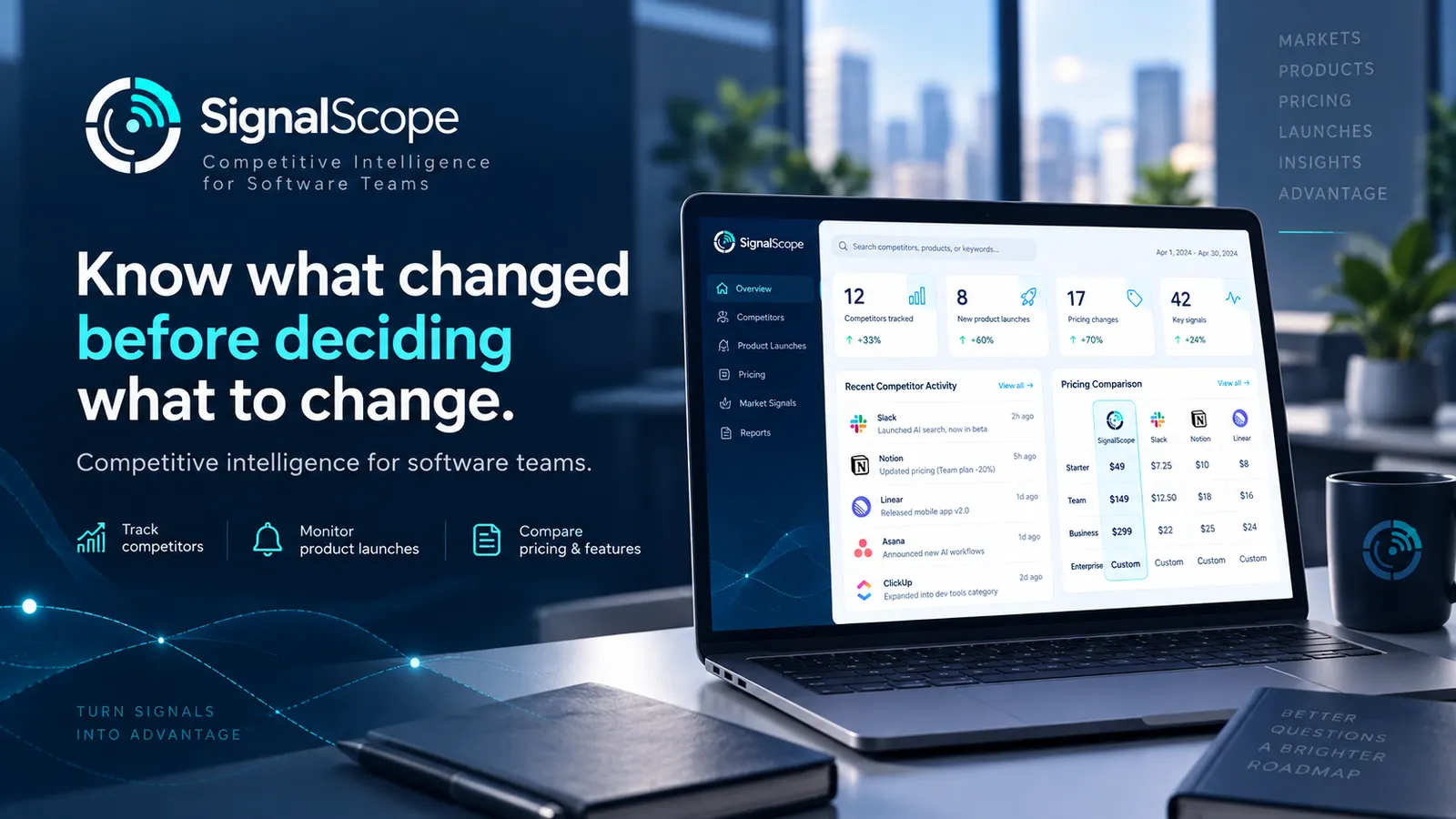 $SIG
$SIG SignalScope
$SIGSoftware & AI Products Research & Intelligence Organization
“Know what changed before deciding what to change.”
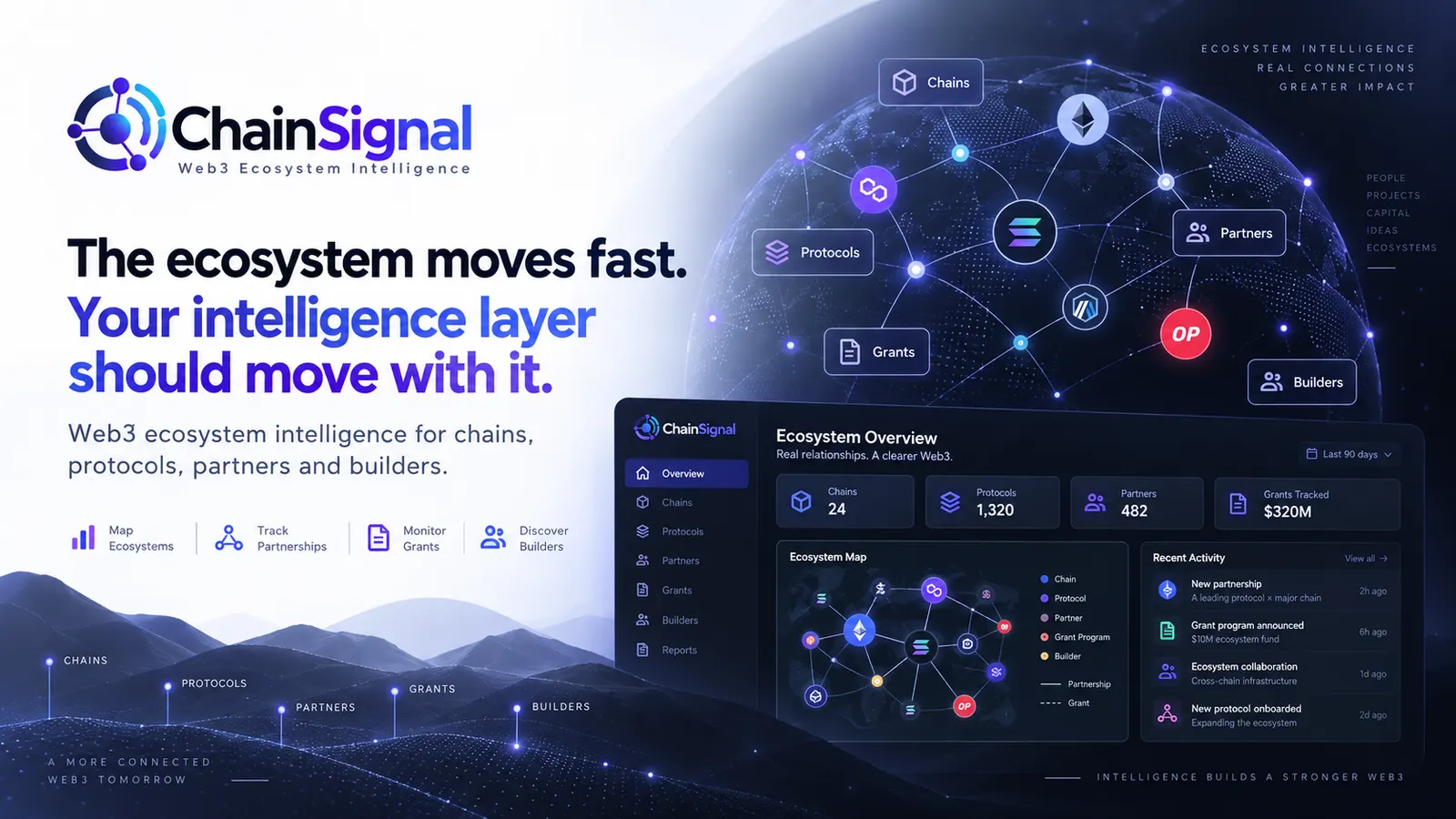 $CHAIN
 ChainSignal
$CHAINWeb3 & Blockchain Research & Intelligence Organization
“The ecosystem moves fast. Your intelligence layer should move with it.”
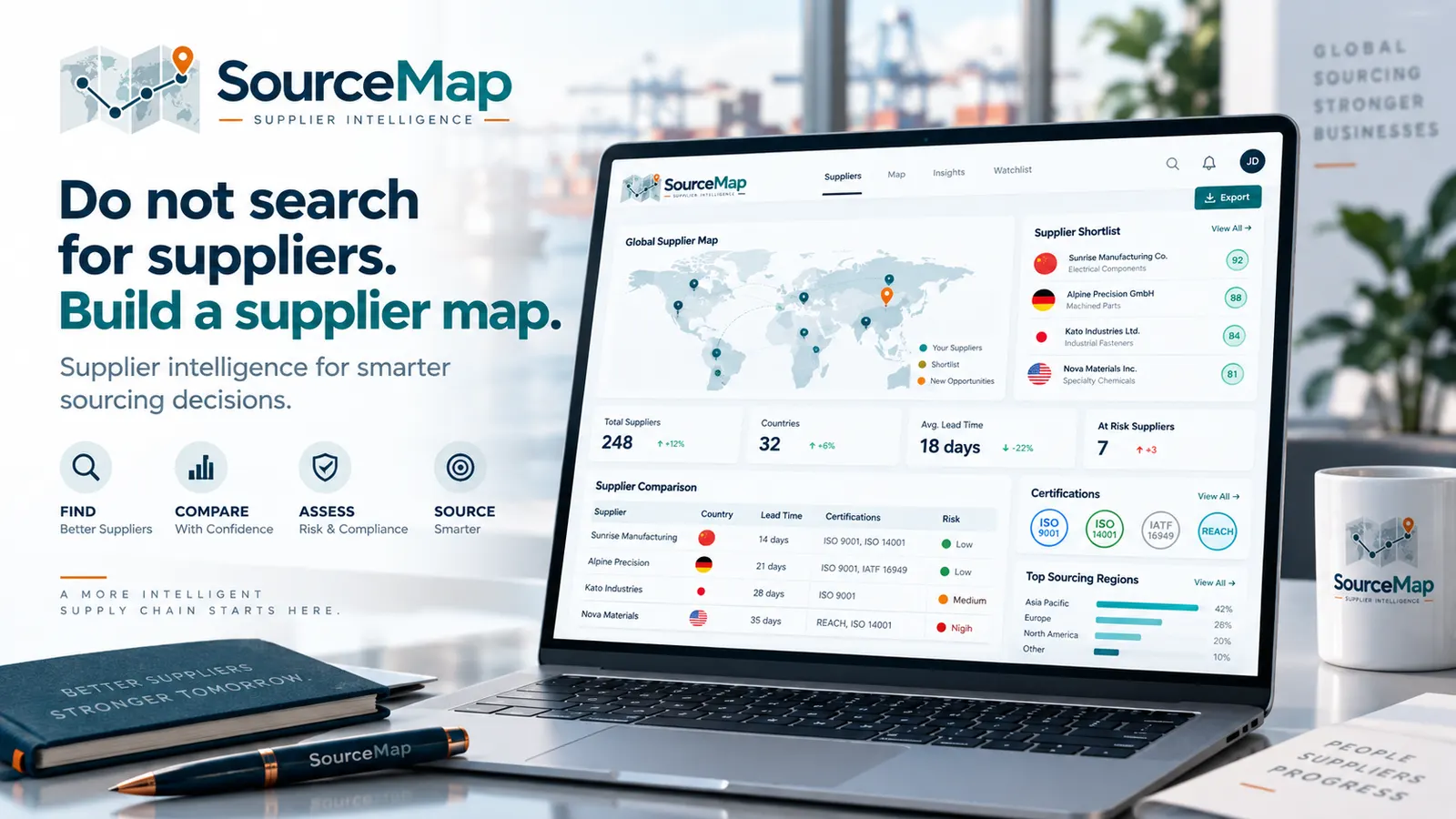 $SRC
$SRC SourceMap
$SRCManufacturing & Supply Chain Research & Intelligence Organization
“Do not search for suppliers. Build a supplier map.”
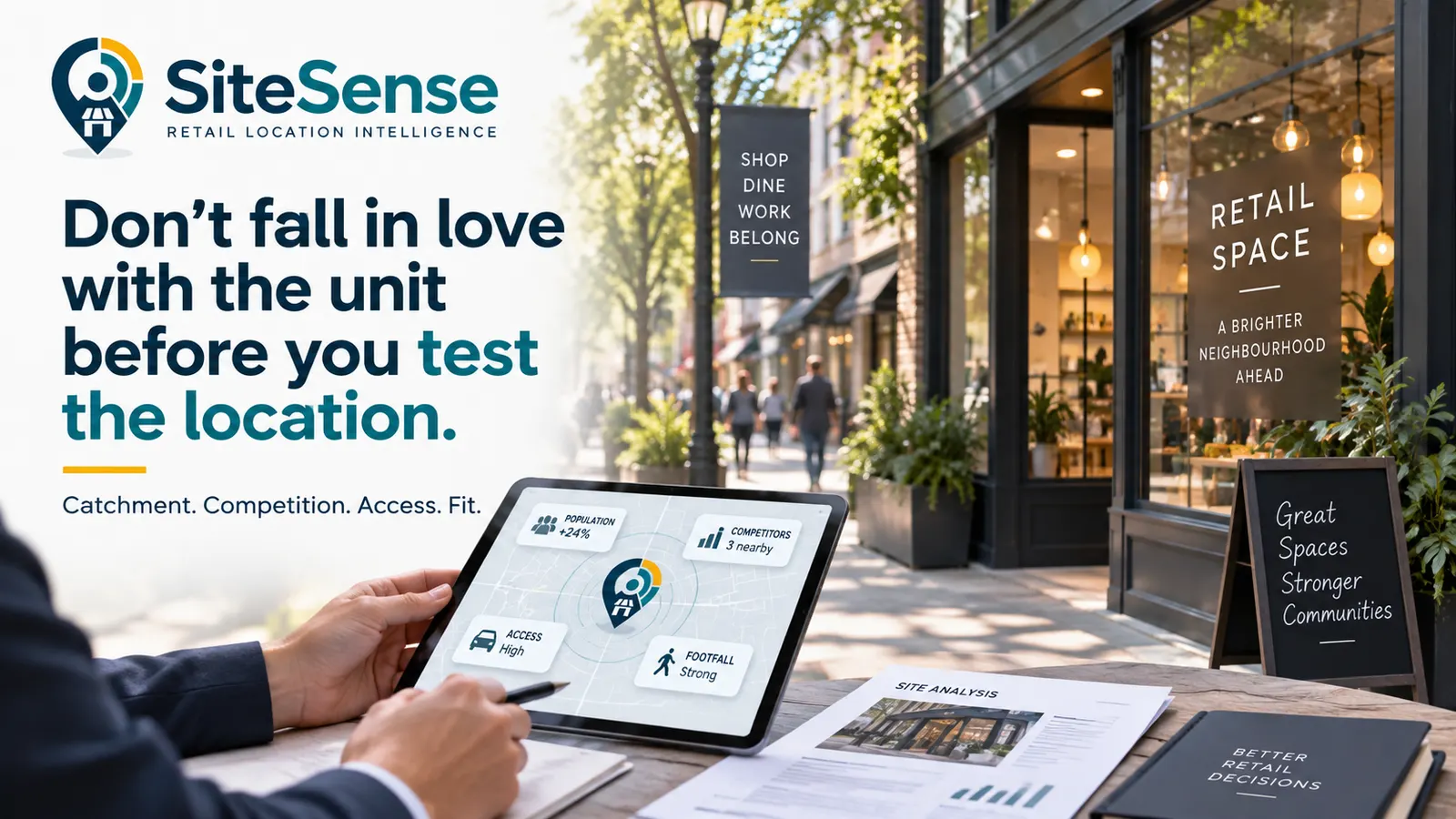 $SITE
$SITE SiteSense
$SITERetail & Physical Commerce Advisory Organization
“Don’t fall in love with the unit before you test the location.”
 $SCOUT
 StyleScout
$SCOUTPersonal Shopping Concierge
“Fewer options. Better fit.”
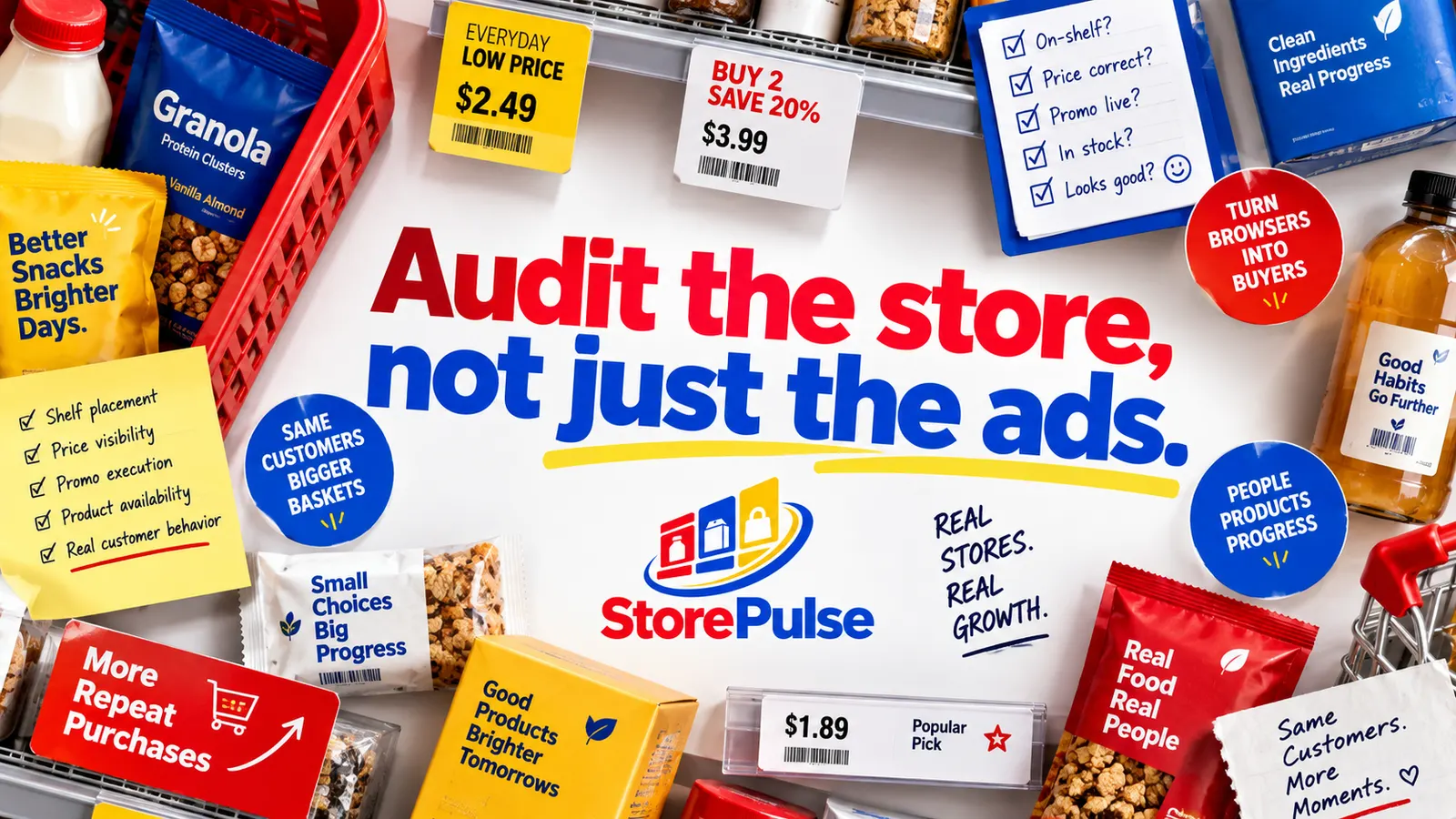 $PULSE
 StorePulse
$PULSEE-Commerce Operations Audit Organization
“Audit the store, not just the ads.”